

What Zaragoza Taught Me about Patriotism
Weekend Reads v. 20 July 2026

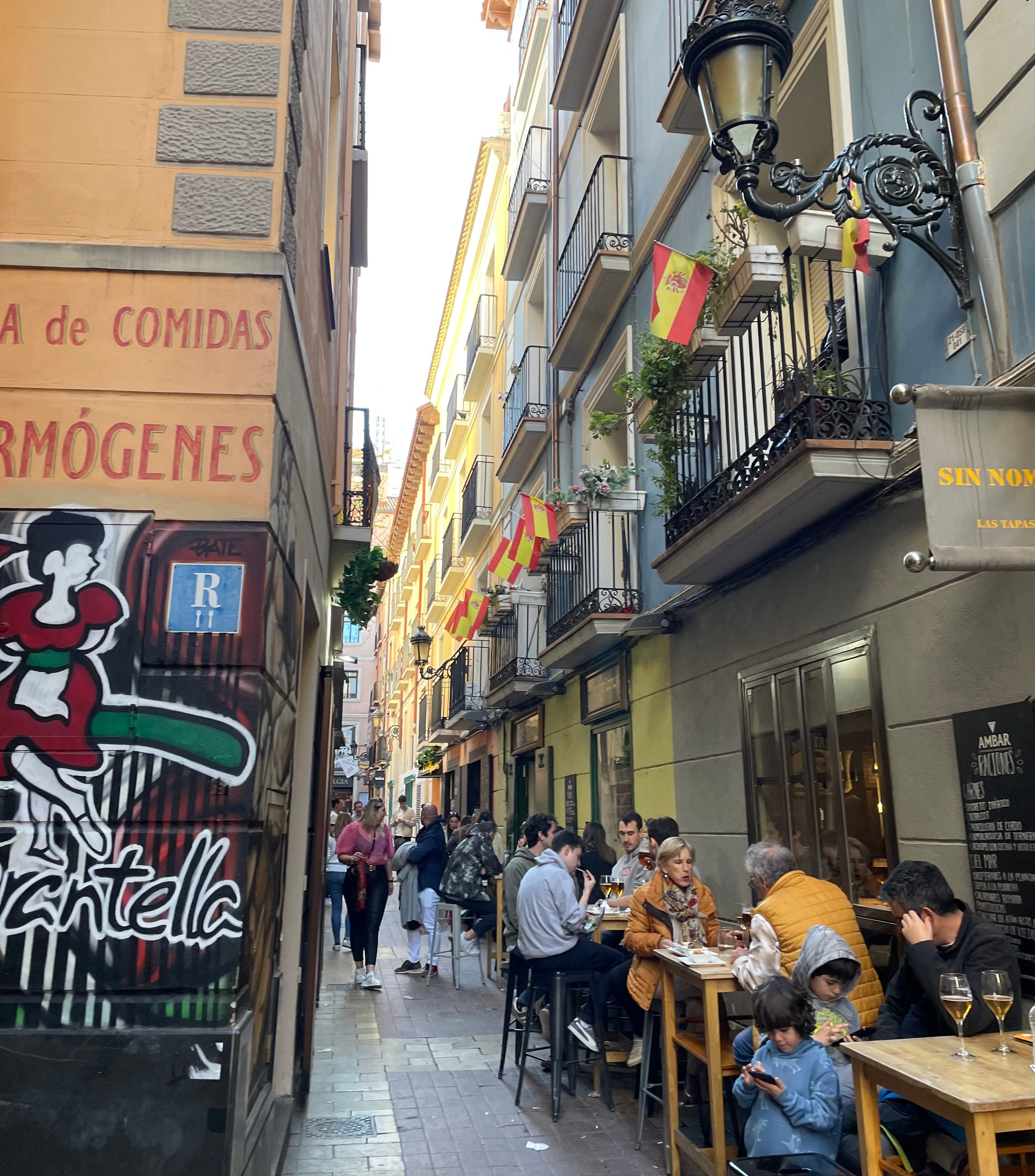
If you ever travel with me, you should know I don’t like being hemmed in. As such, I’m likely to advocate for a car rental and time in the outskirts. I’ll ask to add a trip to a grocery store to our itinerary, and if we are in a country that doesn’t speak English I’ll try to find at least one restaurant where the menus are in a script unrecognizable to us, and the dishes are a gamble. Maybe we’ll like them, maybe we won’t, or just maybe we’ll find our new favorite thing.
I wasn’t always like this. No, I was a more tentative traveler, relying on those taxing itineraries laid out in glossy travel guides. (Must they always weigh so much?) A year spent working in another country pushed me to get comfortable with being uncomfortable, and I’ve never looked back.
Part of the joy of submerging myself in a completely different environment where I’m constantly in learn-mode is experiencing the thrill that comes with mastering new things. Take getting the hang of foreign road networks, for example. Roundabouts are puzzling the first few times ‘round and then, oh the thrill of getting the hang of it!
I’ve also found I still have a lot of rough edges to sand off myself, and there’s been no better way to do this than by Being Wrong and Being Different. Submerging myself in a small town where tourists are not likely to tread is akin to wearing a giant billboard that says, “I do not know what I am doing.” In these scenarios, I cannot run from the awkwardness that comes with standing out, and this uncomfortable patch of real estate is the place where I grow the most.
This was certainly the case when my husband and I decided to split a trip to Spain into three legs: Madrid, Zaragoza, and Barcelona. When we cheerily shared our itinerary with a chatty concierge in Madrid, we were met with, “Why would anyone want to go to Zaragoza?”
Duolingo had not equipped me with how to say, “Because, kind señor, I need a discomfort zone built into my holiday.”
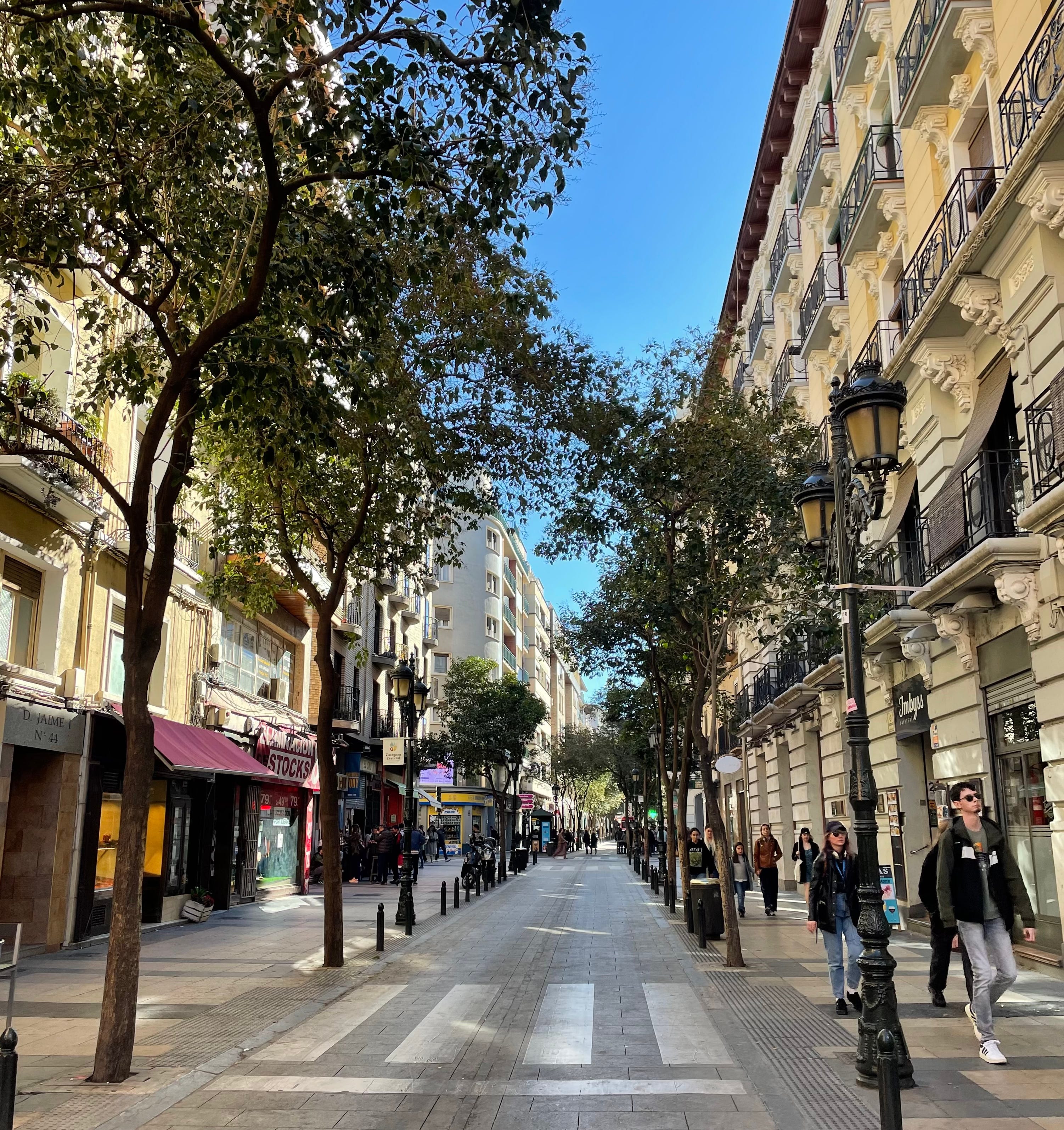
A quick Google search will tell you Zaragoza is a sunny place full of history. Remains of a Roman wall, two cathedrals, and a stunning example of Moorish architecture in the form of an 11-century Islamic palace. The food is also good, though we sure had a hard time finding English menus.
We happened upon this little city on the day Real Madrid would meet FC Barcelona in an epic showdown to be broadcast in every bar at 20:00 sharp. The pride people felt for their country was palpable. This was the pinnacle of Spanish football, and we arrived just in time to bear witness. It was as though we’d stumbled upon the eve of some fantastic holiday that could only be celebrated with a team jersey and a pint of lager. I can’t exactly remember why we decided to watch the match from our hotel room – were the bars selling tickets? Had we reached our limit on talking exclusively with hands and broken Spanish? – but there we were with our hotel picnic, excitedly watching the pregame atop our very European two-twin-beds-shoved-together-as-one bed.
The moment the game started, the camera panned away from the football pitch and focused on the stadium lights. The audio remained, but the only action we saw were the thousands of bugs flying toward those lights. Hmm..somewhere a camera man is getting fired, we thought, and changed the channel. Another channel was broadcasting the game, yet this time we only saw the seats where one of the coaches would sit. Audio played as we stared at empty seats or the feet of assistant coaches as they raced to and fro on the sidelines.
Apparently television rights for The Big Match were so exclusive that our hotel’s cable package did not make the cut. Now we saw why people made arrangements to watch the game in bars and restaurants!
We were so bummed. Not because we had a favorite team (though if David Villa were still playing, I would most certainly have cheered for Barcelona) but because we’d been infected by the pride we saw displayed in shop windows. Even our limited Spanish understood this game was all anyone talked about that day, and we wanted to be a part of it. People were united even as they wore different team colors, and the joy they felt spilled over into the way they folded us into short conversations as they shared pride for their city, their team, their country. We certainly stood out as different, but those bits of conversation invited us to join the festivities.
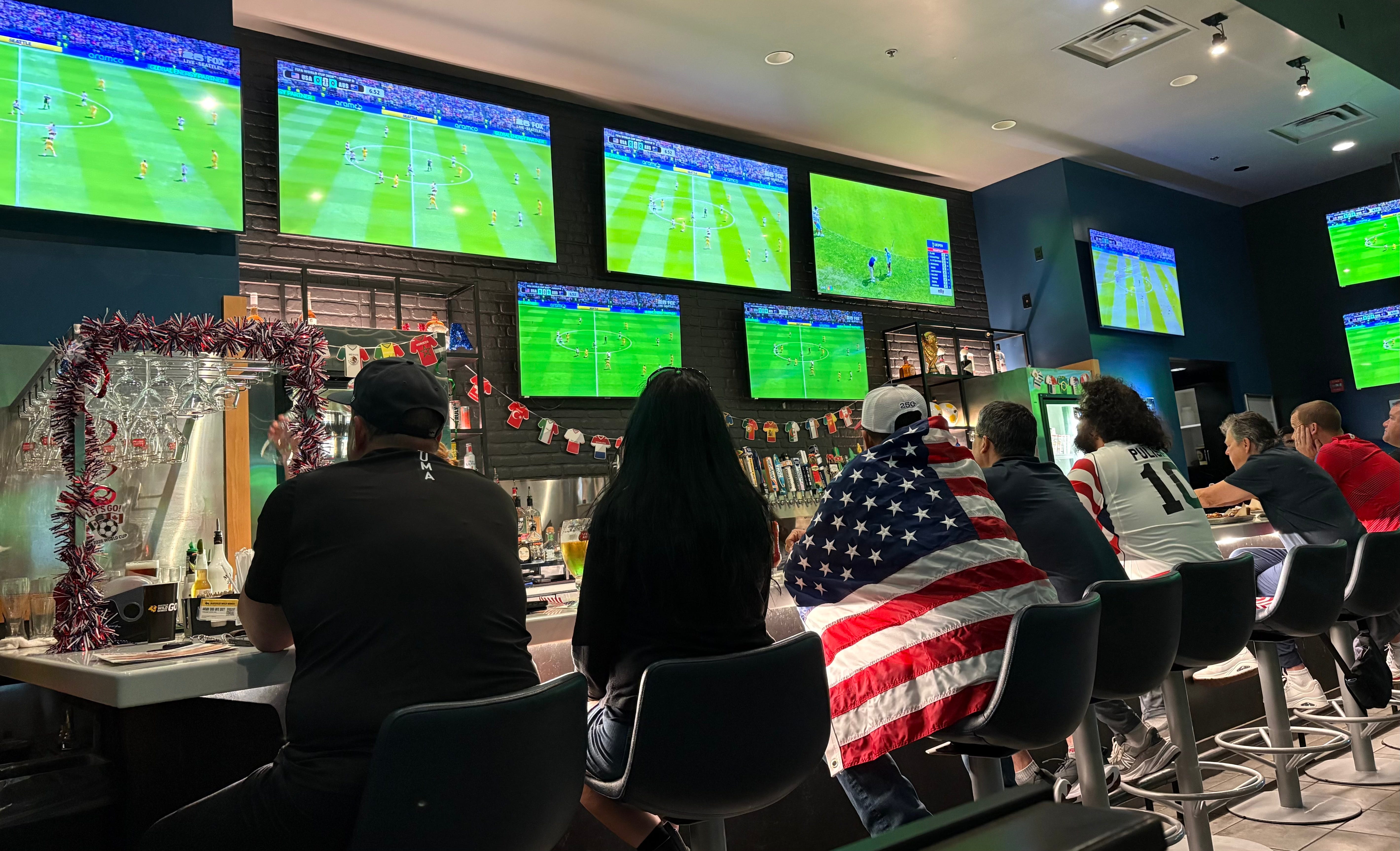
Yesterday as I watched Australia and America meet on a pitch in Seattle as part of the World Cup, I had a vivid flashback to the sunny streets of Zaragoza. People mainly wore stars and strips and chanted “U.S.A” where I was, which was to be expected seeing as we were at a bar full of U.S. Marines stationed at nearby Quantico. But those few people, like our waitress, who sported the yellow and green jersey of the Australian team beamed just as much as the Team America fans. We were all there for the same reason – to watch this great game, to enjoy ourselves, to forget our troubles for 90 minutes.
This is not an advert for football for it was not football that united us. We were there to cheer for the people and places to which we were tethered. People are naturally apt to develop an inherent pride in their origins. History shows us this truism over and over, though it’s hard to remember that in our current day and age where we are often encouraged to downplay nationality. To be clear, this pride in place I speak of is not the thing that is weaponized when maniacs go to war. No, this is the pride of place you enjoy when you strike up a conversation with a person who has relocated from one corner of the world to another. This is the energy you feel when someone explains why they support the football team of the country their grandparents called home even though they’ve yet to visit that place. It’s also the gratitude you witness when an immigrant shares their divided heart – one half saved for the country of their birth and the other half devoted to the land they now call home.
You can love where you came from and love where you live, these are not mutually exclusive. You can honor the old ways and respect the new, these are also not mutually exclusive. And you can be a global citizen while also proudly wearing your hometown’s jersey.
These are divided times, to be sure, but time has always held division. I want this to be a corner of the internet where you can take a break from the turmoil of the news and social media, so there won’t be any politics here. My comments are focused solely on who we are at our core – unique people who all came from somewhere. It is popular now to downplay these places of origin, but I can testify to the fact that when you avoid who you are and where you came from, you waste precious energy and time that could be devoted to enjoying your life. Being ashamed of who you are and the place that shaped you is a fool’s errand.
If someone rolls their eyes at your patriotism, I hope you’ll remember they are the one to be pitied, not you. They are the one casting division out among the crowd by using their words to strip identifying marks. Each country has remarkable and deplorable traits, just like each person. You may say “to-may-to,” and I may say “to-mah-to.” Your favorite childhood food may have been a grilled cheese, while mine was a quesadilla.
The fact remains we likely have more similarities than differences, even if we sport different jerseys.
Speaking of Spain, here’s why Spanish cities are a triumph of design.
And on the subject of FC Barcelona, here is an incredible look into the genius of Lionel Messi. He’s one to watch during the World Cup, that’s for sure.
OK Go’s music videos still rock. How they do these in one take, I’ll never know!
Read this one with a tissue. Emily Jane Johnston talks about the unexpected pain that came with losing her beloved golden retriever. “I knew we were losing a dog today, I never even thought about the pain of losing our vet family.”
San Francisco is no longer slouching toward Bethlehem. This sobering account of drug dealers overrunning San Francisco’s Tenderloin neighborhood is a stark contrast to Joan Didion’s famous “look at the dark side of the Haight-Ashbury counterculture during the Summer of Love.” But seriously, though. How do we get our cities back?
Anyone out there ever use Turo? I’m considering giving it a try for an upcoming trip as an alternative to traditional car rental companies and Uber.
Toile but personalized with nods to your favorite city. And a reminder that this is the greatest wallpaper I’ve ever seen.
The Tokyo hotel made famous by Sofia Coppola’s Lost in Translation gets a makeover.
The health benefits of awe.
“Wheeled vehicles existed for 5,000 years before someone thought of running a bus service.”
Here’s a funny look at why Father’s Day gift guides are full of so many weird things:
“This is probably something I should talk about in therapy, but my favorite kind of gift guide is a Father’s Day gift guide.
They correctly assume that all anyone wants for a made-up holiday is a fun gadget and/or a gift card for wagyu hot dogs. I’m not a Grill Dad, a Golf Dad, or a Car Dad (and my own dad died when I was 11), but every time I scroll through one of these lists, I learn about some new tool or device I didn’t know existed, like an industrial-strength toothpaste tube squeezer, or a portable pizza oven, and feel a brief but potent shopper’s high.
This is why Father’s Day gift guides are so funny: absolutely no one needs an industrial-strength toothpaste tube squeezer and/or a portable pizza oven (even if it allows you to make “pizza in places you never thought possible”). But no one seems to know enough about their own fathers’ interior lives to venture beyond the obvious stereotypes and get them literally anything else. According to these gift guides, everyone’s dad is a reclusive alcoholic with bad taste and a love of sharp objects? And while that may be true… I feel like, as a society, we should maybe stop giving men more knives.” (Source)
Try something new this weekend…or don’t. It’s your life to live exactly as you like!